Sunday, June 12, 2016

Pinot Noirs from around the World


Burgundy (France) has reigned supreme for hundreds of years when it comes to the best wines made from the Pinot Noir grape, which is not to say that there aren’t a quite a few reputable competitors in both the Old and New World, especially with regard to moderately priced, affordable wines for everyday consumption.  In recent tasting classes we sampled pinot noir wines from a number of countries and regions, comparing and contrasting styles and profiles of this noble varietal made famous in the movie “Sideways”.  From light, fruity and delicate to robust, dense and complex, the myriad expressions of pinot noir are unmatched among single varietals.  Discover for yourself the delicious delights of one of the most popular (and perhaps, misunderstood) wines on the market these days.  (All wines are available at Total Wine except the Domaine Arnoux, which was a Chairman's Select at the Penna. State Store.)

The overall favorite of the first class was the Meiomi, whereas in the second class, the Domaine Arnoux received the highest marks.  To be fair, the first class was not offered a Burgundy - they were all New World pinots -, however, the contrast in styles is so distinct between the two that the first class may not have been persuaded by the original Burgundy.  In the end, of course, it's a matter of personal taste, and as this sampling shows, there is plenty of pinots on the market to cater to each and every palate.  If I were to choose a favorite from the two classes, I would go for the Kudos Reserve which lies somewhere between the Chorey-lès-Beaune and the Meiomi. A votre santé!


Chilcas Pinot Noir Reserva 2013 ($16)


Varietal: 100% Pinot Noir

Region: Denominacion de San Rafael, Valle del Maule, Chile

Production/Tasting Notes: Aromas of fresh cherries and white strawberries; gentle floral notes (roses), and earthy notes compliment fruity palate; spice notes of rosemary, oregano; fresh persistent finish.

13.5 % Alcohol
A to Z Pinot Noir 2013 ($18)


Varietal: 100% Pinot Noir

Region: Newberg, Oregon

Production/Tasting Notes: aromas of cherries, raspberries, and blackberries, developing to iris, blueberries, strawberries and minerals; vibrant red fruit flavors and floral notes, then deepens with hints of blood orange and blueberry jam. Ripe tannins are balanced by perfect acidity and the mid-palate reveals spice, tobacco and earth notes adding richness and complexity; long finish.

Food pairings: Salmon, halibut, or trout; all manner of pork; grilled meats and vegetables from chicken to venison; braised meats and stews; root vegetables and mushrooms, especially mushrooms; duck with cherry gastrique

13.0 % alcohol

Domaine Arnoux Père et Fils, Chorey-lès-Beaunes, Les Beaumonts 2013
($22; reg. $35)


Varietal: 100% Pinot Noir

Classification: Appellation Chorey-lès-Beaune Contrôlée, Burgundy, France
 
Production/Tasting Notes: 100% hand harvested; aged in oak barrels for 12 months; vine age 20-25 years; alluvial soil of marl limestone; black cherry and black currant flavors; lively acidity, moderately tannic; long finish; 87 points, Wine Spectator

Food Pairings: roast poultry, grilled meat, game birds; soft cheese

14 % Alcohol
 
Meiomi Pinot Noir 2014 ($18)
 Pinot Noir
                 

 Varietal: 100% Pinot Noir

Region: Monterey (48%), Sonoma (27%) & Santa Barbara (25%) counties

Production/Tasting Notes: Aged in 100% French oak barrels, 60% new; spicy aromas (Santa Barbara); bright berry flavors (Sonoma); dark fruit, rich texture (Monterey);aromas of bright strawberry and jammy fruit, mocha, and vanilla, along with toasty oak notes.
“Expressive boysenberry, blackberry, dark cherry, juicy strawberry, and toasty mocha flavors lend complexity and depth on the palate. The well-integrated oak provides structure and depth seldom seen in Pinot Noir” -Winemaker's notes);
“Rich yet medium-weight, offering and exciting interplay of berry, oak, earth and spice notes, with subtle edges to the blueberry, raspberry, mocha and fresh-turned earth flavors; aftertaste of melted black licorice” - Wine Spectator; #20 in 2015 Top Wines, 92 points.

Food pairing: tomato-based pasta dishes, thin-crust pizza, grilled lamb, and turkey.

13.7% Alcohol

   Framingham Pinot Noir 2013 ($24)


Varietal: 100% Pinot Noir

Region: Walrau Valley, Marlborough, New Zealand

Production/Tasting Notes: Blended from 13 base wines, harvested from 7 different sites; plunging 3 times daily during fermentation with both spontaneous and inoculated yeasts; malolactic fermentation 10 months maturation in both new (20%) and seasoned French barriques; after maturation base wines blended and bottled unfined and unfiltered; nose of dark cherry fruit, smoky bacon, savoury notes; spicy complexity arising from the oak; meaty nuances; palate is ripe, juicy with fine-grained tannins. 92 points, Jame Suckling.

Food pairings: lamb, duck, or even salmon dishes.
13.5 % alcohol 
 

Kudos Reserve Pinot Noir 2014 ($22)


Varietal: 100% Pinot Noir

Region: Yamhill-Carlton AVA, Willamette Valley, Oregon

Production/Tasting Notes: Cold soaked 4-5 days before fermentation; daily pumpover and punch-down; 10 months aging in French oak barrels (15% new); malolactic fermentation. Concentrated wine with luscious dark fruit flavor profiles; layers of blackberry, black cherry, wild herbs, spice (white pepper) and savory minerality; intense, vibrant
Food pairings: roasted duck; swordfish
14.1% alcohol
    Fire Road Pinto Noir 2014 ($15)

                         
 Varietal: 100% Pinot Noir

Region: Marlborough, New Zealand

Production/Tasting Notes: Frequent plunging throughout primary fermentation, followed by malolactic fermentation; easy drinking style, fruit driven; aromas of red cherries with dark berries with toasty oak; on the palate ripe red raspberries, black cherry followed by toasty oak and spice. Drink within  2-3 years.

Food pairings: red meat, pasta, Thai beef salad

13.5% alcohol

Sierra Batuco Pinot Noir Reserva 2013 $14)


Varietal: 100% Pinot Noir

Region: Valle del Maule (coastal mountain region), Chile

Production/Tasting Notes: Pre-fermentation grapes undergo cold maceration of 5-7 days; open tank fermentation for 10 days; aged in French oak barrels for 8 months;  nose of plum and vanilla, followed on the palate with notes of cherry, toffee and licorice fresh acidity, soft pungent oak notes; medium bodied

Food pairings: magret de canard (duck); pastas with rich sauce
13.5 % Alcohol

 Coelho Atracao Pinot Noir 2013 ($18)


Varietal: 100% Pinot Noir

Classification: Willamette Valley (AVA), Oregon

Production/Tasting Notes: Non-irrigated, sustainably farmed; volcanic & sedimentary soil; aromas of spice, cherries and toasty cedar; velvety texture enhanced by flavors of cherry, cranberry, chocolate; vibrant; supple, smooth finish; medium-bodied
12.3% Alcohol


    Sextant Pinot Noir 2014 ($25)


Varietal: 100% Pinot Noir  

Region: Santa Lucia Highlands, California

Production/Tasting Notes: 70% fermented in 5-ton open containers; the rest in 10-ten tanks; aged 11 months in neutral French oak barrels; aromas of wild stawberries, lavender, anise; on the palate notes of cherry, loamy earth, followed by black tea, red currants on the finish; balanced acidity, smooth tannins; long, lingering finish; medium bodied. May be cellared for several years.

Food pairings:  fresh pasta with light marinara sauce; grilled prawns with lime squeeze; roasted quail wrapped in grape leaves and bacon
14.7 % alcohol

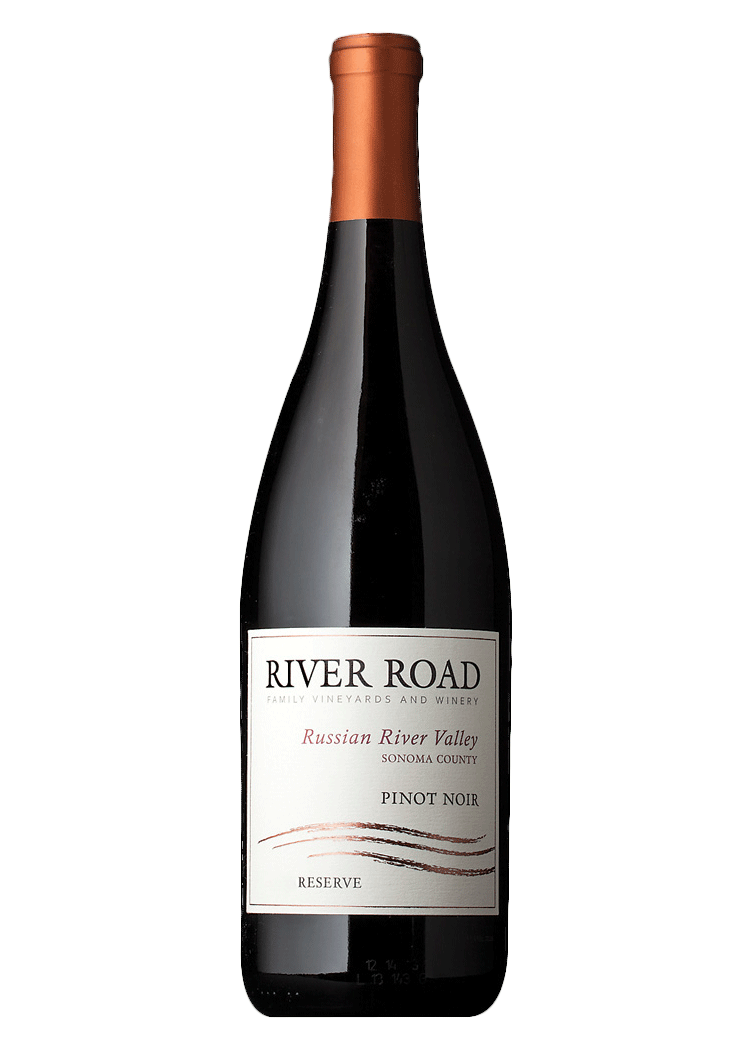
    River Road Russian River Valley Pinot Noir 2014 ($19)


Varietal: 100% Pinot Noir

Region: Russian River Valley, Sonoma Country, California

Production/Tasting Notes: barrel aromas of anise, molasses, dusty earth, sweet smoke, wisp of cardamom;  ripe (sweet) cherry, plum  flavors on the palate; layers of mulling spice, smooth tannins; blackberry jam lingers on the long finish.
Food pairings: roasted duck; swordfish
13.7% alcohol


Factoids about Pinot Noir

-       One of the 7 noble grape varietals
-       The only red grape permitted in the Côte d’Or region of Burgundy
-       Cultivated in Côte d’Or for over a thousand years
-       Thrives in cooler climates, such as Willamette Valley (Oregon), Russian River Valley (Calif.), Carneros (Calif.), Marlborough (New Zealand)
-       Styles range from fresh fruit/easy drinking to intense fruit/ripe tannins to elegant/medium-full bodied with succulent fruit flavors, complexity and refined tannins
-       Thin-skinned, late ripening, prone to rot and easily damaged by rough handling
-       Notoriously difficult to make into premium wine
-       One of the primary varietals used to make Champagne
-       Gained increased popularity following the movie “Sideways” in 2004
-       Known as Blauburgunder or Spätburgunder in Teutonic regions


Tuesday, May 3, 2016

Viva Italia! - Italian Wine Dinner

At the most recent wine dinner among friends, we celebrated the wines of Italy from top to bottom, with a few in between.  There are so many different wine varietals and regions in Italy, it can make the head spin, so it's best to highlight just a sampling of the most distinctive and acclaimed wines, including whites and reds.  Mass-produced Italian wines can leave much to be desired, and typically are marketed to attract the widest customer base with little discrimination - I'm talking Pinot Grigio, Chianti (not Chianti Classico), Valpolicella, as well as other common varietals produced by big labels such as Bella Sera,  Bolla, etc.  This is a shame since often for about the same price there are so many other alternatives of a much higher quality with more interesting characteristics and deeper, more complex taste profiles.  And even for the higher end wines, it's definitely worth a splurge now and then to experience a truly exceptional wine.

So with this in mind, I chose a selection of appealing wines from several different regions in Italy that offer a range of styles, price points and traits, but just scratch the surface of what awaits the adventurous wine consumer.

We started off with a favorite white of mine which I featured in a previous post (12/20/14).  I especially recommend Verdicchio for getting out of the Pinot Grigio rut, and the price point is so ridiculously low - one of the best bargains around among the Italian wines - that you'd be foolish not to give it a whirl.  Indeed pretty much everyone was gobsmacked when I revealed the price - only $8 ! (plus tax).

The next white is one that's gaining ground among the wine cognoscenti and was rescued from obscurity a few decades ago, and appears on more and more restaurant wine lists.  Arneis, "little rascal" in the local dialect, demands attention to appreciate its elegant, sophisticated style - not one to knock back, but sip slowly during the course of meal, or even to contemplate as an aperitif.  It's somewhat reminiscent of the whites of the Southern Rhone, such as Roussane, Marsanne or White Grenache.

And speaking of Southern latitudes, we journeyed down to the volcanic area of Sicily for the first red, a blend of  Nerello Mascalese and Nerello Cappuccio, from the Etna region. This is just a delightful, flavorful wine, bursting with all sorts of fruit aromas, yet with a firm, medium body and juicy finish.  (Nero d'Avola is no doubt the most popular red coming out of Sicily, but the Nerello Mascalese is gaining ground and definitely deserves a place in your wine budget.)

Moving back up to Central Italy, it was time for the evening's "pièce de résistance", the ultimate in wines made from the Sangiovese grape.  I refer, of course, to the Brunello di Montalcino, long revered as one of the preeminent wines Italy.  This was an excellent bargain at $38 (regular $45) as most Brunellos are upwards of $50, and often much more. If you only know Sangiovese from Chianti, you are in for quite a revelation of what the grape is capable of from a different denominazione.

For our final wine of the evening, we moved to the most northern region to sample another highly acclaimed red.  Nebbiolo is the grand varietal of the Piedmont and is the basis for Barolos, Barbarescos, and Langhe wines.  Barbaresco can be regarded as a kind of kid brother of Barolo - from similar stock, but usually less costly, being aged for a shorter period of time. It exhibits many of the same distinctive qualities - concentrated dark fruits, truffle, licorice and rich tannins - yet comes off as softer, more approachable without sacrificing the rich flavors and firm body. 

1. Fattoria Laila Verdicchio dei Castelli di Jesi (about $8, plus tax)


Varietal: 100% Verdicchio

Classification/Region: Denominazione di Origine Controllata (DOC) Verdicchio dei Castelli di Jesi

Production/Tasting Notes: Bouquet of yellow spring flowers; stone fruit; creamy peach; citrus/lemon flavors; hint of sea salt, almond; crisp, refreshing acidity. (89 points, Wine Enthusiast)

Food pairings: grilled fish; seafood; salads; aperitif; calamari
13 % Alcohol

  1. Il Falchetto Arneis 2013 ($18, plus tax)


Varietal: 100% Arneis

Classification: Langhe DOC (Piedmont)

Production/Tasting Notes: Terroir composed of sandy soil on left bank of Tanaro river;intense mineral and fruity notes;warm and fresh on the palate bolstered by good acidity

Food pairings: starters; seafood; sushi; cheese

13 % Alcohol

3. Le Sabbie Dell'Etna, Firriato 2013 ($16, plus tax)


Varietal: Nerello Mascalese; Nerello Cappuccio

Classification: Etna Rosso DOC (Catania)

Production/Tasting Notes: Terroir – sandy loam of volcanic origin; 14 day fermentation; 6 months in durmast barriques; mineral notes with intense, clearly defined aromas of cassis, blueberries, plum jam, black cherries, licorice, pepper and dried violets; well- balanced on the palate, warm, rich, refined; long aromatic persistence with juicy finish. (89 pts. Robert Parker)

Food Pairings: Squid-ink pasta (pasta al nìvuro di sìccia); pigeon breasts in red wine sauce (blancs de pigeon au rouge); roasted squab with crisped almonds; wild mushroom and eggplant filo

14% Alcohol

    4. Podere La Vigna Brunello di Montalcino 2010 ($38, reg. $45, plus tax)


Varietal: 100% Sangiovese

Classification: Brunello di Montalcino DOCG

Production/Tasting Notes: Vinification of 18-20 days in stainless steel vats with multiple daily punching down; 2yrs aging in oak barrels; minimum 6 month bottle aging; sweet and savory notes combining cherry and plum fruit with licorice and saline elements, supported by burly tannins; concentrated, ripe fruit; lengthy finish. (94 pts. Wine Spectator)

Food Pairings: black truffle tagliata (grilled, thick-sliced beef)

14.5% Alcohol
    5. Giribaldi Barbaresco 2006


Varietals: 100% Nebbiolo

Classification: Barbaresco DOCG (Garantita)

Production/Tasting Notes: cherry, plum and tobacco aromas and flavors supported by dense tannins; lingering finish of spice and mineral. (93 pts. Wine Spectator)

Food Pairings: poulty, pork chops, veal chops, ravioli, stews; Gorgonzola cheese; spices: basil, oregano,chives, tarragon, thyme, fennel
14% Alcohol

Wine Notes on Italy

Piedmont

  • Barolo & Barbaresco DOCGs are named after communes in respective regions
  • DOCs Barbera, Dolcetto and Nebbiolo take the name of their dominant varietal
  • Nebbiolo, the varietal of Barolo & Barbaresco, is known locally as Spanna
  • Arneis, a white wine grape once nearly extinct, has made a big comeback in recent years and means “little rascal” in the local dialect, as it’s difficult to grow

Red Varietals of Sicily:
  • NERO D’AVOLA- The second-most-planted variety in Sicily after Catarratto.
The wine typically has vivid blackberry smells. In the mouth, it has moderate to high alcohol, but its most outstanding characteristic is the high acidity that balances the otherwise soft texture.

  • NERELLO MASCALESE- In English, this Latinate word means “little black one,”
The wine is pale cherry red, with aromas of flowers, particularly violets, red fruit, tobacco,and spices, and in the mouth it is lean, with moderate alcohol, high sourness, and moderate astringency. In appearance the wine is very close to Pinot Noir.

  • FRAPPATO- The wines are pale cherry red and lightly structured, very spicy and floral,

and loaded with vivid cherry and pomegranate fruitiness

Friday, March 18, 2016

The Wines of Portugal

              Inspired by my recent trip to Portugal (see blog post of December 3, 2015) and eager to feature again robust, full-flavored and moderately priced wines from the edge of the Iberian peninsula, my wine tasting classes this March surveyed several different regions from this often overlooked but rising star of European wine regions. 
             
          Most of these wines were purchased at the Lisbon Wines & Liquors in Newark, New Jersey (see blog post of January 17, 2014) which has a extensive collection of Portuguese wines, including Ports, at very attractive price points.  It's definitely worth a trip up the turnpike not only for the wines, but the restaurants, markets and cafés in this charming Lusophonic neighborhood.

         A few notes about wine terminology in Portugal:

         "Quinta" is widely used in the Douro region to refer to a winery/estate, similar to "Château" in France.

          "Adega" is the analogous term used in the Alentejo region.

          There are two main classifications of wine in Portugal:

          "Vinho regional" otherwise known as Protected Geographical Indication, which is equivalent to the Vin de Pays in France.  There are also sub-regions within a particular PGI. For example, in the Alentejo region there are eight different sub-regions.

           "Denominacao de Origem Controlada" (D.O.C.) which is the higher classification and is equivalent to the Appellation d'Origine Controlee in France.


             Wine Regions of Portugal


      Whites

     QG (Quinta de Gomariz) Alvarinho 2014 (about $17 plus tax, at PA state store)


Varietals: 100% Alvarinho

Region: Vinho Regional Minho

Production/Tasting Notes: Racy (lively), fresh; intense citrus (grapefruit) and floral notes on the nose; tart, crisp acidity with persistent minerality; lingering finish.


Food pairings: salads; grilled fish, seafood; shellfish; poultry; Asian cuisine

12.5% alcohol


 Quinta de la Rosa White 2011 (about $20, reduced from $30, at PA state store)
                 
Varietals: 35% Viosinho, 35% Rabigato with the rest being mixed varieties such as Gouveio and Códega do Larinho among others


Region: Denominacao de Origem Controlada (D.O.C.) Douro

Production/Tasting Notes: partially fermented and matured in barrels for 6 months (50%) and the rest in stainless steel tanks before being bottled in May 2012; harvested between August 9 and September 31 (sic); well-balanced with good natural acidity; full-bodied; rich and smooth on the palate, backed up with persistent minerality.


Food pairings: tapas; summer salads; grilled/broiled full-flavored fish – swordfish, dourado, Dover sole; seafood; shellfish

13.5 % Alcohol


     Cartuxa Evora Branco (White) 2013 (about $12 plus tax, in Newark, NJ)


Varietals: 50% Antao Vaz; 50% Arinto


Region: Denominacao de Origem Controlada (D.O.C.) Alentejo


Production/Tasting Notes: The wines take their name from the Carthusian monks, who since 1598 have lived a life of solitude and prayer in the Monastery of Santa Maria Scala Coeli. Produced and bottled by Fundacao Eugenio de Alemeida at Adega Cartuxa, Evora, Portugal; granitic soil; fermentation in stainless steel vats; lees aging for 9 months with batonnage (stirring of the lees); first produced in 1986; delicate fragrant(citrus) aromas; fresh, crisp acidity;harmonious; persistent lingering finishmedium bodied


Food pairings: grilled fish, seafood; shellfish


14% alcohol


Esporao Reserva White 2013 (about $15 plus tax, in Newark)


Varietals: 30% Antao Vaz; 30% Arinto; 30% Roupeiro; 10% Semillon


Region: D.O.C. Alentejo


Production/Tasting Notes: Produced by Herdade do Esporao, farmed under principles of integrated production, respecting traditions winemaking techniques, and diversity grape varietals; stainless steel fermentation followed by partial aging for 6 months in French and American oak barrels; bottled in March 2014; soil – granite and schist origin with clay loam; aromas of rich, intense, notes of peach and grapefruit, well integrated toasty notes; palate is creamy and complex, well balanced, deeply fruity with minerality and a fresh and persistent finish; drink by 2018

Food pairings: tapas; grilled/broiled full-flavored fish – swordfish, dourado, Dover sole; seafood; shellfish
14 % Alcohol

Reds


UDACA Vinho Tinto (Red Wine) Dao 2013 (about $7 plus tax, in Newark)


Varietal: Touriga Nacional; Alfocheiro; Tinto Roriz (Tempranillo); Jaen

Classification: D.O.C Dao

Production/Tasting Notes: Produced and bottle by Uniao das Adegas Cooperativas do Dao (UDACA); soil – granite, clay and limestone; controlled temperature fermentation for 5-6 days; ruby colored; complex aromas of ripe red (dried) fruit and spice; soft, velvety on the palate with persistent finish; medium-bodied; may be cellared for up to 5 years

Food pairing:  sausage, chorizo; hard cheeses


13% Alcohol


Chao das Rolas (turtle dove) 2013 (about $9 plus tax, in Newark)


Varietals:; 35% Aragonez (Tempranillo); 35% Alicante Bouschet; 10% Trincadeira; 10% Syrah; 10% Castelao


Region: Vinho Regional Peninsula de Setubal

Production/Tasting Notes: Produced and bottle by Herdade da Comporta (1st year of production 2003). Stainless steel fermentation; deep garnet color; very ripe fruit and jammy notes on the nose; round, smooth and full-bodied on the palate with gentle acidity and lingering finish. (85 points, Wine Enthusiast)
Food pairing: grilled meats; cheeses

13% Alcohol

Heradade do Esporao Quatro Castas 2014 (about $17 plus tax, in Newark)


Varietals: 25%Touriga Franca; 25% Cabernet Sauvignon; 25% Syrah; 25% Alicante Bouschet

Region: Vinho Regional Alentejano


Production/Tasting Notes: Sustainably farmed vineyards; separately vinified: Touriga Nacional (red berried fruit aromatics) – stainless steel fermentation; 6 months aging in American oak; Cabernet Sauvignon (structure and elegance) - stainless steel fermentation; 6 months aging in French oak; Syrah (mocha notes on the nose;solid mid palate fruit) – robotic plunging vinification; 6 months in American oak; Alicante Bouschet (for intensity and balance) stainless steel fermentation; 6 months aging in stainless steel. Dense and compact palate with bright fruit and integrated toasty oak. May be cellared up to 2021.

Food pairings: braised meats; pork and claims; hearty cheeses
14.5 % alcohol

Crasto Douro Red 2013 (about $14 plus tax, in Newark)


Varietals: 35% Touriga Nacional; 30 % Tinta Roriz; 25% Touriga Franca; 10% Tinta Barroca


Region: D.O.C. Douro

Production/Tasting Notes: Produced and bottled by Quinta do Crasto; granitic soils; deep, violet color.
Winemaker's notes: Fresh on the nose, with intense berry fruit aromas and elegant floral notes. Balanced and well-structured on the palate, with berry fruit flavours. The tannins are round and finely-textured. Elegant and lingering finish”;
Wine Spectator notes: "Powerful, with concentrated slate and mineral notes to the dark currant, dried berry and raspberry ganache flavors. Very lithe midpalate, with a long, focused finish. Drink now through 2020." (91 points).


Food pairings: grilled meats; tomato based dishes; curries

14% alcohol

For more recommendations from my previous class on Portuguese wines, please see blog post of January 20, 2014.

Saturday, January 16, 2016

Wine Tasting & Dinner Party: France - From Burgundy to the Atlantic Coast

In early December, a group of friends gathered for what has become a semi-regular wine and food pairing dinner of several courses to explore in depth a particular wine region, learning about its history and wine culture, and sharing thoughts and conversation in a relaxed and convivial setting.

The theme for this occasion was  French wines from the Atlantic coast to the geographical heart of France, in particular the Beaujolais appellation.  You can read more about these regions further below in this post.  As an indication of the value and appeal of these wines, every wine in this tasting was a "winner" such that no single one stood head and shoulders above the other, each incorporating delightful tasting profiles and reflecting its particular terroir.

I encourage you to seek out wines from these regions at your favorite wine shop, especially the Cru Beaujolais for you red wine lovers. They offer excellent value and quality, and can pair with a wide variety of foods.  All wines in this tasting are available at Wine Works in Cherry Hill, New Jersey.


1. Domaine de la Pepière Muscadet 2014 (about $14, plus tax)


Varietal: 
Muscadet (Melon de Bourgogne)

Classification:
 Appellation Muscadet Sèvre et Maine sur Lie Contrôlée

Production/Tasting Notes: 
40 year old vines; organic grapes; natural yeast fermentation; extended lees contact; deep, vibrant bouquet eliciting aromas of lime, green apple; crisp, dry, lemon-tinged; floral & briny scents; tangy citrus and oyster mineral notes across palate; full- bodied for a Muscadet.

Food pairings: quintessential shellfish wine- oysters, clams, mussels; fish, risotto; cheese

12 % Alcohol


  1. Apud Sariacum Sancerre Domaine Philippe Raimbault 2014 (about $20, plus tax)


Varietal: 100% Sauvignon Blanc

Classification: Appellation Sancerre Contrôlée

Production/Tasting Notes: Terroir composed of limestone soil, fossilized shellfish; intense mineral flavors, citrus tones, tropical notes; vibrant acidity, crisp, complex. (One of Eric Asimov's “20 under $20” selections)

Food pairings: starters; seafood; sushi; cheese

12.5% Alcohol

3. Jean-Paul Brun "Terres Dorées" Morgon 2013 (about $19, plus tax)


Varietal: 100% Gamay

Classification: Appellation Morgon Contrôlée

Production/Tasting Notes: Natural yeast fermentation; aged in Burgundian barrels; granite soil; nose is nicely focused with bright red cherry and wild strawberry fruit; veins of orange zest and citrus lending more vigor; palate is medium-bodied with strong backbone; finish is long and persistent. (93 points, Wine Advocate)

Food Pairings: breast of duckling; poultry;charcuterie; pizza

      12.5% Alcohol

  1. Domaine Filliatreau “La Grande Vignolle” Saumur-Champigny 2012 (about $20, plus tax)


Varietals: 100% Cabernet Franc

Classification: Appellation Saumur-Champigny Contrôlée

Production/Tasting Notes: Organic; terroir is tuffeau (tufa-stone) outcrop, limestone; fermentation in stainless steel; unfiltered; rich, mouth-filling with ripe flavors of red fruit laced with an undercurrent of minerality; touch of tobacco, earth; excellent aging potential

Food pairings: burgers, salmon; artisan pizza, savory crepes

12.5% Alcohol

  1. Bernard Baudry “Le Clos Guillot” Chinon 2012 (about $30, plus tax)


Varietal: 100% Cabernet Franc

Production/Tasting Notes: Terroir: limestone, clay (argilo-calcaire) with stones and underlying sand; no chemical pesticides or fertilizers.  Fermented 15 days in in wooden vats with regular pigeages (French term for "punching down or stomping" the grape/juice mixture). Aged in barrels that have seen 2 to 5 vintages for 12 months. Hand harvested; unfiltered; bright, energetic, sheer sap belies young vine; bittersweet floral notes; persistent ripe blackberry, walnut oil, savory minerality; good for aging up to 10 years.

Food Pairings: Roast chicken, roasted lamb; braised veal

12.5% Alcohol

Beaujolais: Misconstrued and Misunderstood

Overshadowed by its Burgundian cousins to the north, Beaujolais is often dismissed as “not serious” and lacking the gravitas of a great wine, and, in the US, it is generally misconstrued as “Beaujolais nouveau”, that frilly, frivolous, fruity wine which is produced, bottled and released just weeks after its harvest. “Serious” Beaujolais actually comes in three distinct types or classifications:

  • Beaujolais: the region's most basic, least expensive, light-bodied, fruity wine
  • Beaujolais-Villages: middle category that offers great value with a slightly fuller body and more fruit intensity, produced within 39 selected communes
  • Beaujolais cru: top category from 10 different villages that are also the appellations, including Brouilly, Chénas, Chiroubles, Côte de Brouilly, Fleurie, Juliénas, Morgon, Moulin-à-Vent, Régnié and St.-Amour

Other factoids about Beaujolais:

  • Only the Gamay grape is permitted to be used, and accounts for 98% of all plantings
  • The Gamay grape thrives in the stony, granite-based soil
  • Carbonic maceration is used to vinify grapes, that is, grapes are not pressed, but loaded on top of each other in full bunches and allowed to ferment inside their skins, reducing tannins and intensifying the fruit and perfume
  • The 10 Beaujolais crus have individual styles, are more perfumed, luscious, concentrated and more complete and complex

Factoids about Loire Valley and its Wines

  • Loire Valley wine producers are at the forefront of the natural or biodynamic movement which uses minimalist techniques to make wine.
  • The largest wine region in France, the Loire Valley extends from the edge of the Atlantic Ocean in the Nantais to the central regions of Sancerre and Pouilly Fumé through the heart of the famed Châteaux of the Loire
  • The Loire River runs 625 miles
  • If not for the River, vineyards could not likely grow well so far north
  • There are over 60 different appellations in the Loire Valley ranging in style from bone-dry to intensely sweet, including some excellent pétillants (sparkling wines)
  • Crémant de Loire and Vouvray pétillant are the sparkling wines of the region made from Chenin Blanc, Cabernet Franc
  • The Sancerrois is home to the best Sauvignon Blanc from villages such as Sancerre, Pouilly, Quincy, Menetou-salon and Reuilly

Common Grape Varieties of the Loire Valley

Whites

CHENIN BLANC – Vinified for wines ranging from dry to sweet, from still to bubbly. Predominant grape of Vouvray whites

SAUVIGNON BLANC – Principal grape of the famed Sancerre and Pouilly Fumé AOCs

MUSCADET (alias MELON de BOURGOGNE); THE grape of the Nantais region, renowned for its pairing with shellfish, especially oysters, and seafood.

Reds

CABERNET FRANC – The workhorse red grape of the Loire; if it's a red wine from the Loire, it's most likely Cabernet Franc.

Other reds grown in the Loire: Cot (Malbec), Gamay, Pinot Noir, Pineau d'Aunis, Grolleau


Friday, January 8, 2016

France vs. California (& Washington): A Comparative Tasting

This past November I had the pleasure of conducting a wine tasting with food pairings at a friend's home as the result of a silent auction for charity to benefit the Peasant Association of Fondwa in Fondwa, Haiti.  I donated the wine and my services; Dick and Julie "won" the wine tasting with the highest bid.  They hosted the event, and invited a small group of friends to partake in a delightful evening of fun, food and conversation about wine.

I decided to do a taste comparison of Old and New World wines, highlighting the differences between French wines and their analogues in California (and one from Washington state).  It's always important in these kinds of comparisons to choose wines of similar varietals and price points, so that no one wine has an unfair advantage over the other.  I did have some trouble finding a Bordeaux style blend from California at the same price point to put up against the Bordeaux selection, and in the end the best I could come up with was a Washington blend.  Apart from that, all paired wines were of the same varietal and price point.

Opinion seemed to be split between the Sauvignon Blancs, though both were enjoyed by all.  The Louis Jadot Pinot Noir turned out to be a disappointment, whereas the River Road Pinot Noir was a clear favorite and overall winner.  It should be said that Louis Jadot produces wines that run the gamut from everyday affordable quaffs to super deluxe gems that will break your bank account.  The upshot here is that for about $20 there are a lot of very good and interesting Pinot Noirs from around the world to choose from and that this particular Louis Jadot is not one of them.

The Bordeaux selection offered up the most complex and persistent bouquet testifying to the region's long tradition of high quality wines that have become the standard bearer among many wine connoisseurs. That said, I found it telling that no one in the group (besides myself, of course), had ever sampled a Bordeaux wine before.  What this says to me is that nowadays the wine consumer in the US enjoys such a wide variety of options in terms of price, origin and style, that there is no single dominant region or "brand" which said consumer aspires to.  Furthermore, American wine producers have made great inroads in the purchasing habits and tastes of the American consumer without compromising quality, as was shown by this tasting. Try such a comparison yourself and see if you don't agree!

  1. Bougrier Sauvignon Blanc 2014
                          

Varietal: 100% Sauvignon Blanc

Classification/Region: Vin de Pays, Val de Loire, France

Production/Tasting Notes: Characteristic aromas of grapefruit and minerals; notes of lime on the palate supported by undertones of flint, apple blossoms, passion fruit;bright acidity; crisp, clean finish.

Website: Bougrier.fr

Food pairings: shellfish, poached seafood; goat cheese

12 % alcohol

2. Joel Gott Sauvignon Blanc 2013


                              joel gott sauvignon blanc california 2011

Varietal: 100% Sauvignon Blanc

Region: Monterey, Lake County, Napa Valley, Sonoma

ProductionTasting Notes: 100% stainless steel fermentation and aging; bright citrus notes complemented by tropical aromatics; refreshing flavors of melon, Meyer lemon on the mid-palate; long, clean finish

Website: gottwines.com

Food pairings: tapas; grilled fish; seafood; shellfish
13.9 % Alcohol

3. Louis Jadot Pinot Noir 2011


Varietal: 100% Pinot Noir

Classification: Appellation d'Origine Contrôlée Bourgogne

Production/Tasting Notes: Fruit fro, Côte d'Or, Côte Chalonnaise; age in French oak for 9 months; aromas of plums, raspberries, cherries;fresh fruit on the palate; balanced acididty, smooth tannins on the finish

Food pairing: roast chicken, pork or grilled fish

12.5% Alcohol


  1. River Road Pinot Noir 2014


Varietals: 100% Pinot Noir

Region: Sonoma County

Production/Tasting Notes: Bright harmonious notes of cherry, wildberry, plum and spice; notes of dusty earth and sweet smoke; wisp of cardamom at end of bouquet; bright cherry fruit up front on the palate with sweet plums, soft oak and vanilla flavors long, soft, spicy finish w/ blackberry jam lingering.

Website: riverroadvineyards.com

Food pairings: roasted duck; swordfish

13.3% alcohol

  1. Montfort-Bellevue Médoc Cheval Quancard 2012


Varietals: 45% Merlot; 40% Cabernet Sauvignon; 15% Cabernet Franc (label);
40% Merlot, 52% Cabernet Sauvignon, 8% Cabernet Franc (website)

Region: A.O.C. Médoc (Bordeaux)

Production/Tasting Notes: Six months aging in oak barrels; aromas of cedar, spice, blackfruit, kirsch, cherry, burnt wood; elegant, ripe blackberry and soft creamy cassis laden fruit with ripe tannins; well-balanced, hint of toast; smooth, lengthy aromatic finish.

Website: chevalquancard.com
Food pairings: roast or grilled red meat, delicatessen and hard cheese.

13 % alcohol

  1. Kamiak Rock Lake Red 2012


Varietal: 53% Syrah, 44% Merlot; 3% Cabernet Sauvignon

Region: Columbia Valley, Washington

Production/Tasting Notes: 16 months aging in French and American oak barrels; aromas of smoked anise, violets, rose petals and cherry with hints of juniper berry; soft and silky with flavors of bright fruit with black pepper; firm tannins with a lingering plum finish with spicy oak notes

Website: kamiakwines.com

Food pairings: grilled red meats; hard cheeses

13.8% alcohol

The Five “S’s” of Tasting:

1) Seeing; 2) Swirling; 3) Sniffing; 4) Sipping; 5) Savoring

What Does “Well-Balanced” Mean? F-A-T-A:

Fruit; Acidity; Tannins; Alcohol

Wine Quote:

“On this mountain the Lord of hosts will make for all peoples a feast of rich food and well-aged, refined wines on the lees.”

Isaiah 25:6